Retail software that connects stock, sales, and decisions
Bring inventory, point-of-sale, loyalty, and store performance into a clearer operating view. Augmex builds retail platforms and analytics tools around the way your teams make daily decisions.
What is retail software development?
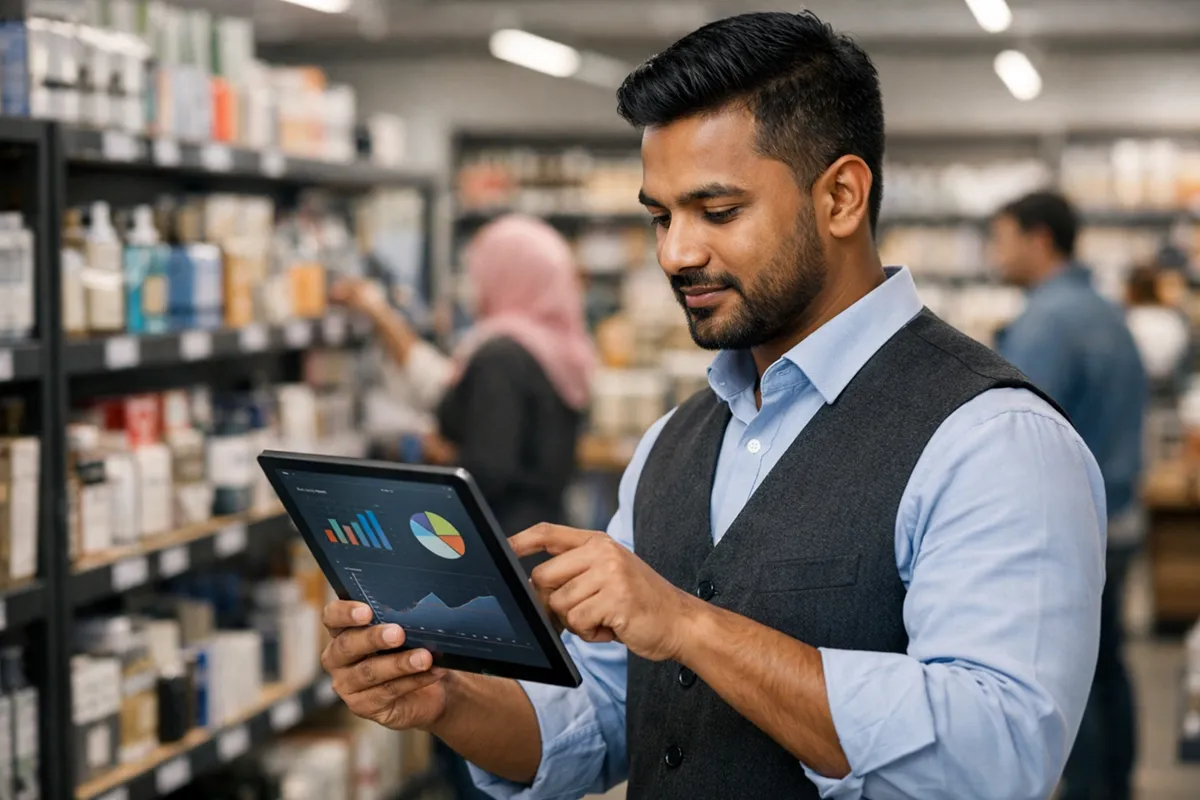
Retail software development connects the systems that store teams use to understand stock, sales, customers, and performance. A useful platform can combine point-of-sale data, inventory records, loyalty activity, forecasting, and management reporting without forcing every decision through a spreadsheet. Augmex scopes and builds these tools for retailers that need clearer visibility across locations or channels.
Which problems can custom software solve?
- Inventory that is always wrong somewhere: Stockouts on popular lines and overstock on slow ones drain margin at both ends. Balancing it across locations needs real-time tracking and forecasting, not gut feel. Clearer stock visibility
- Customer experience that does not feel personal: Shoppers expect to be recognized across channels. Generic experiences lose them to retailers who tailor the journey. Relevant customer journeys
- Data that sits unused in silos: Sales, loyalty, and inventory data rarely connect, so the insight that would change a buying decision never surfaces in time. Faster, sharper decisions
- A digital shift that legacy systems resist: Consumer behavior moved online faster than most retail stacks did. Bridging store and digital is engineering work, not a plugin. Connected retail channels
What does Augmex build for Retail teams?
Retail analytics and forecasting
We connect your data sources and turn them into demand forecasts, customer insight, and dashboards the buying team actually uses.
- Predictive demand forecasting
- Customer behavior analysis
- Real-time operational dashboards
- Unified data across channels
Inventory and omnichannel operations
Real-time inventory across locations plus the integration that makes online and in-store one experience rather than two systems.
- Multi-location inventory tracking
- Online and in-store sync
- POS and payment integration
- Supply chain API connections
Loyalty and customer retention
Loyalty programs and personalization built on real data, so repeat purchase is driven by relevance instead of generic discounts.
- Personalized loyalty programs
- Customer data platform
- Targeted offers and segments
- Retention analytics
How is AI changing retail operations?
AI is moving retail from gut-feel to evidence across forecasting, personalization, and pricing. The retailers that adopt it carefully cut waste at both ends of the shelf.
Demand forecasting is moving to AI
Models trained on your sales and seasonality predict demand far better than spreadsheets, which means fewer stockouts on winners and less dead stock on the rest.
Personalization spans every channel
AI ties online and in-store behavior into one view, so offers and recommendations follow the customer instead of resetting at each touchpoint.
Pricing and promotions are becoming dynamic
AI adjusts pricing and promotion timing against demand and inventory, protecting margin without the manual guesswork.
Why pilot AI forecasting before a full rollout?
Forecasting models need your real data and a season to prove out. Starting with one category or region shows the lift against your current baseline before you wire it across the whole estate.
- Pilot on one category or region first
- Measure against your current forecasting baseline
- Integrate with your POS and inventory systems
- Scale on proven lift, not on a vendor promise
Which Augmex services fit this work?
- End-to-End Development: A full squad to build retail analytics and operations platforms.
- AI-first Software Development: Test forecasting, search, and decision-support features against your own retail data.
- Staff Augmentation: Add retail-experienced engineers to your team on demand.
- Vested Growth Teaming: Build a long-term product team with incentives tied to agreed business outcomes.
Which Augmex products may be relevant?
- BlackBox: Headless AI engine for demand forecasting and recommendations.
- CRM: Customer and loyalty management with segmentation and automation.
- AI Chatbot: Customer assistant for product questions, orders, and support.
What has Augmex delivered in Retail?
Leading Super Shop case study
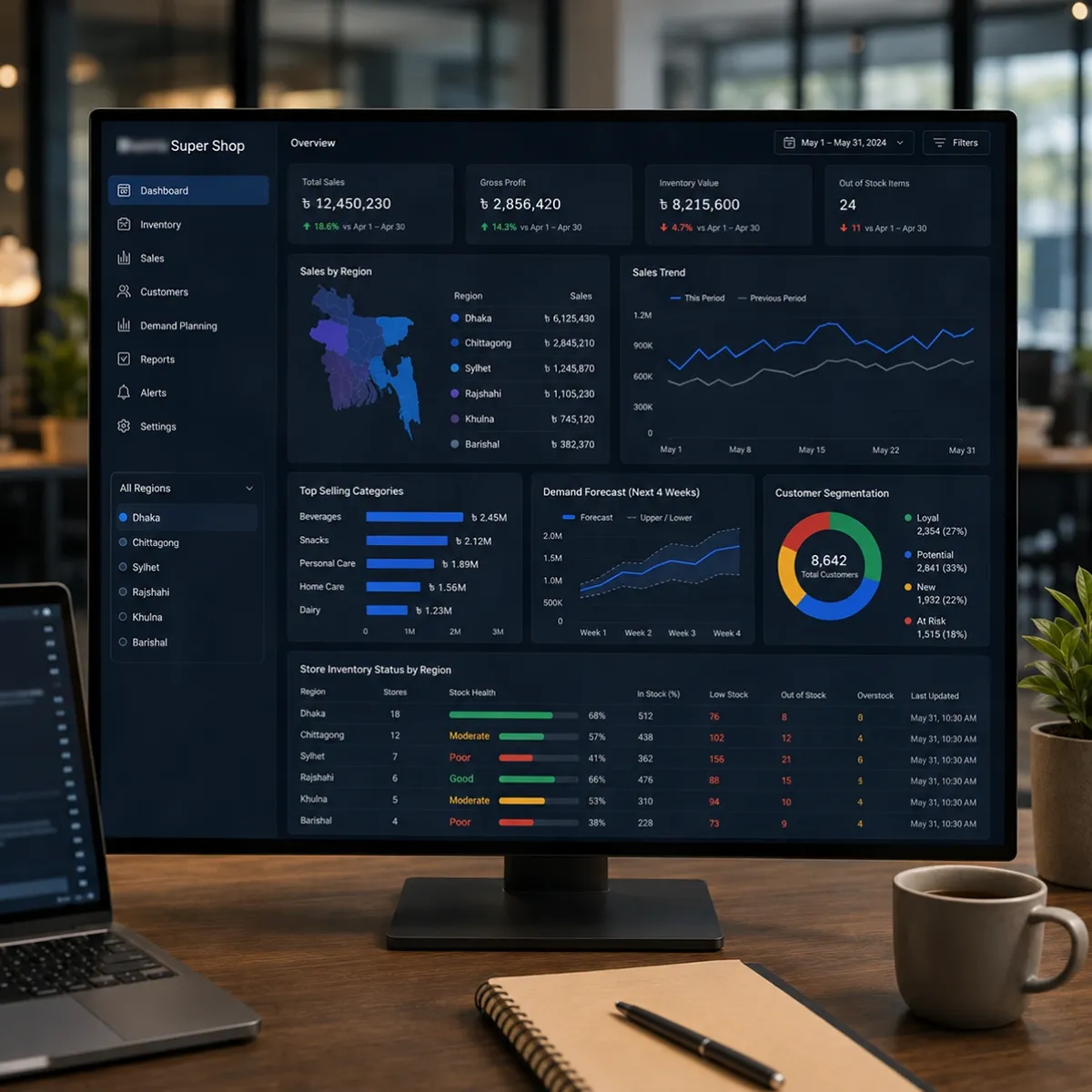
Location: Bangladesh
Result: Improved inventory visibility, demand planning, customer segmentation, and operational reporting
Challenge: A multi-location retailer struggled with inventory across stores, had little customer insight, and repeatedly ran out of popular items while overstocking others.
Solution: We built a data analytics platform with real-time inventory tracking, customer behavior analysis, and predictive demand forecasting, so the team could plan from data instead of instinct.
Team: 2 Data Engineers, 1 Data Analyst, 1 Full Stack, 1 Business Analyst, 1 PM
Timeline: 7-month development cycle
The data analytics solution has transformed how we manage our retail operations. We now make data-driven decisions that have significantly improved our inventory management and customer satisfaction.
How does an Augmex retail project work?
- Connect the data: We map your POS, inventory, and customer data sources, find where insight is trapped, and scope a platform that brings them together. 2-3 weeks
- Team assembly: We match data engineers and analysts with retail experience to the project. You interview each candidate before they join. 1-2 weeks
- Build and instrument: Short sprints delivering dashboards, forecasting, and integrations in stages, so the buying team gets value before the full rollout. Ongoing
- Train and refine: We train retail staff on the tools and tune the models against real results, because forecasting improves with use. Ongoing
Related services, case studies, and insights
- Retail analytics case study: See how Augmex connected inventory, customer, and sales data for daily retail decisions.
- Data-driven retail for French e-commerce: Read a practical guide to using retail data without creating another reporting burden.
- AI-first software development: Explore focused AI products and features grounded in business workflows and usable data.
Frequently asked questions
- How can data analytics improve our retail business?
- It turns guesswork into evidence. Analytics surfaces what is selling, where stock is misallocated, and how customers actually behave, which sharpens decisions on assortment, pricing, promotions, and inventory. The payoff is fewer stockouts, less dead stock, and more repeat customers.
- What kinds of retailers do you work with?
- Supermarkets, fashion, electronics, specialty shops, and multi-location chains. Solutions are tailored to the segment, so a single store and a national chain get systems built for their scale rather than a one-size template.
- How long does a retail analytics build take?
- The timeline depends on the number of data sources, data quality, integrations, forecasting scope, and user roles. We define the first useful release during discovery and deliver in stages so store and management teams can test the product with real workflows.
- Can you integrate with our existing retail systems?
- Usually, provided the existing systems expose usable APIs, exports, or database access. We inspect the available interfaces and data quality first, then define how information should move between the current stack and the new product.
- Do you train retail staff on the tools?
- We do. Rollouts include hands-on training, documentation, and ongoing support so the team genuinely uses the system. Analytics only pays off when the people making buying calls trust and understand it.
- How do you secure retail and payment data?
- We layer encryption, secure authentication, and access controls, and build to payment standards like PCI DSS. Customer and payment data stays protected while remaining available to the staff who are authorized to use it.