Startup software development that gets your idea to users
From validation to a focused MVP and the team that supports it, Augmex helps founders ship useful software without building a large permanent engineering team first.

What is startup software development?
Startup software development turns an early product idea into software that can be tested with real users. Augmex helps founders define a focused release, build the product, and add engineering capacity as the roadmap becomes clearer. The engagement can begin with a small delivery team and expand when the product, customer demand, and funding justify it.
Which problems can custom software solve?
- A runway that punishes every slow month: Every week without shipped product burns cash you cannot get back. Senior local hires are expensive and slow to land, and a wrong hire at this stage can end the company. Scope matched to runway
- Time to market measured against your burn: Investors and competitors both move on calendar time. A six-month build can mean a missed window. You need working product in front of users while the idea is still hot. Focused release planning
- Hiring senior engineers you cannot yet afford to keep: The talent you need at seed stage is the talent every funded company is fighting for. Recruiting it full-time before product-market fit is risky and expensive. Flexible team shape
- Founder time lost to managing delivery: When the founder is also the de facto engineering manager, the things only a founder can do, fundraising and customer discovery, slip. Delivery needs an owner who is not you. Clear delivery ownership
What does Augmex build for Startup teams?
MVP to first revenue
We scope the smallest thing that validates the idea, build it, and put it in front of real users. Fixed scope, fixed price, no scope creep dressed up as iteration.
- Validation-first scoping
- Eight to twelve week build
- Real-user instrumentation from day one
- A clear path from MVP to v2
A team that scales with your funding
Start with one or two engineers and grow as you raise. No redundancy obligations, no lock-in, so headcount tracks your actual stage rather than your hopes.
- Start small, scale on demand
- No long-term headcount commitment
- Founder-aligned engineers
- Same rituals as an in-house team
Technical partner through fundraising
We help you stand up to investor scrutiny, with architecture that survives due diligence and a team that can answer the hard technical questions in the room.
- Architecture documentation
- Technical demos for investor meetings
- Scalability and security review
- A clear technical handover
How is AI changing what early-stage teams can build?
AI has reset what a small team can ship and what investors expect to see. It also adds new ways to waste a runway if you build the wrong thing fast.
The cost of a first version has collapsed
A small team can now ship more in weeks than a large one used to in months. The risk shifts from build cost to building the wrong thing quickly, with debt that slows you later.
AI changes what a small product team can test
Models and development tools can shorten some experiments, but the product still needs a useful workflow, reliable evaluation, sensible cost controls, and a reason for customers to return.
Iteration speed beats feature count
The advantage now is testing directions weekly against real users, not shipping the longest feature list. AI makes that loop faster if the foundation is sound.
Why an MVP is non-negotiable for an AI startup
AI features cost real money to run, so the use case and the unit economics both have to be proven before the full build. An MVP tells you whether people want it and whether you can afford to serve it.
- Prove there is genuine demand for the AI feature
- Validate model quality on your real data, not a demo
- Measure cost per query before you scale it
- Raise on traction, not on a slide about AI
Which Augmex services fit this work?
- MVP Development: Validate the idea with real users in eight to twelve weeks.
- Staff Augmentation: Add senior engineers to your team without the full-time overhead.
- End-to-End Development: A full squad that owns delivery while you focus on the business.
- Vested Growth Teaming: Lower upfront cost in exchange for upside tied to your growth.
Which Augmex products may be relevant?
- BlackBox: Headless AI engine you can build on instead of training models from scratch.
- CRM: Lead and pipeline management ready to drop into an early go-to-market motion.
- AI Chatbot: Customer-facing assistant you can ship without standing up an ML team.
What has Augmex delivered in Startup?
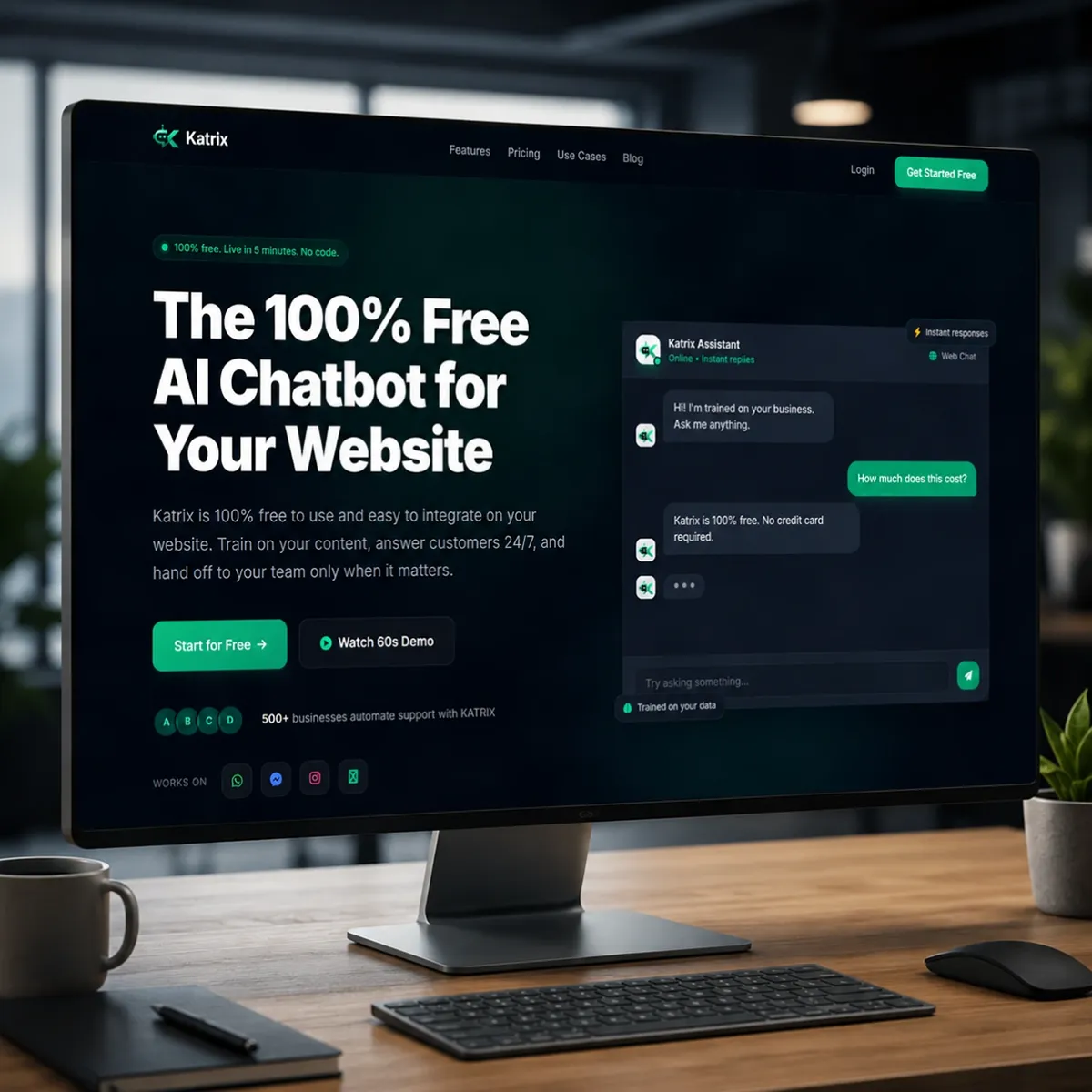
AI Chatbot Builder Platform case study
Location: Confidential
Result: Scale MVP delivered in 8 weeks, grew into a live commercial SaaS with paying customers across multiple sectors
Challenge: The founder needed a production-grade, multi-tenant SaaS where businesses could create and deploy AI chatbots trained on their own data, without writing code. That meant a robust RAG pipeline that could ingest mixed document formats, strict tenant isolation at the data layer, a no-code configuration UI non-technical users could actually operate, and white-label embedding so customers could ship the bot under their own domain.
Solution: We delivered the platform in a two-month Scale MVP engagement on FastAPI plus PostgreSQL, with tenant isolation enforced at the data layer. A LangChain-based RAG pipeline against a vector store let each chatbot answer from its tenant's uploaded knowledge base with source attribution. The no-code UI covered knowledge upload, bot behaviour, escalation rules, and branding without engineer support. An embeddable single-script-tag widget made deployment to any website trivial. The MVP grew straight into a full commercial SaaS with paying customers.
Team: 4 people: 2 backend and AI engineers, 1 frontend engineer, 1 project manager
Timeline: Scale MVP in 8 weeks, full product live April 2026
Augmex understood the architecture challenges of multi-tenancy from day one and delivered something we could immediately take to market. The RAG pipeline performs beyond our expectations and the no-code UI has been a genuine differentiator with our customers.
How does an Augmex startup project work?
- Validate & scope: We pressure-test the idea, define the smallest build that proves it, and give you a fixed proposal you can take to a board or an investor. 1-2 weeks
- Assemble the core team: We match engineers to the agreed stack and responsibilities. You meet the proposed team before delivery starts, and the onboarding plan reflects actual availability and access requirements. 1-2 weeks
- Build the MVP: Short sprints with working software at the end of each. You see progress weekly and can change direction without blowing up the budget. 8-12 weeks
- Scale or pivot: After launch we grow the team as you raise, or turn quickly if the data says pivot. Flexibility is built into the engagement, not bolted on. Ongoing
Related services, case studies, and insights
- MVP Development for Startups: Compare MVP scope, delivery approaches, timelines, and the decisions founders need to make before development begins.
- How to Choose an MVP Development Company: A practical framework for checking product judgment, technical ownership, communication, and handover quality.
- AI Chatbot Builder Case Study: See how a four-person team delivered a multi-tenant AI SaaS MVP in eight weeks.
Frequently asked questions
- How do you price for startups that are pre-revenue?
- We work with the cash you actually have. That can mean milestone-based billing, deferred payments, or starting with a small team and scaling as you raise. Many founders begin with one or two engineers and grow the team after a round closes. We would rather match your funding stage than force a large commitment up front.
- Can you help with just one part of the product?
- Yes. We scope to what you need, whether that is a single engineer for a few weeks or a full squad for months. This modular approach suits founders who need specific expertise, like a mobile build or a payments integration, without committing to a large team.
- How fast can you get started?
- Timing depends on the roles, stack, interviews, and access requirements. After the initial brief, Augmex provides a realistic matching and onboarding plan rather than promising the same start date for every team.
- Do you work with non-technical founders?
- Often, and we are set up for it. We translate business vision into technical decisions and keep you informed without burying you in jargon. Think of us as the technical partner who helps you make calls on architecture and scope, so you do not have to fake confidence in a room.
- What happens if we need to pivot?
- Pivots are normal at this stage, so the product is delivered in short review cycles. When the direction changes, we assess what can be retained, what needs to change, and how the decision affects scope, timeline, and budget.
- Can you help us prepare for investor due diligence?
- Yes. We make sure the architecture holds up to scrutiny, prepare technical demos, and help you answer the hard questions investors ask about scalability and security. The goal is for your technology to be an asset in the raise, not a liability someone uncovers.